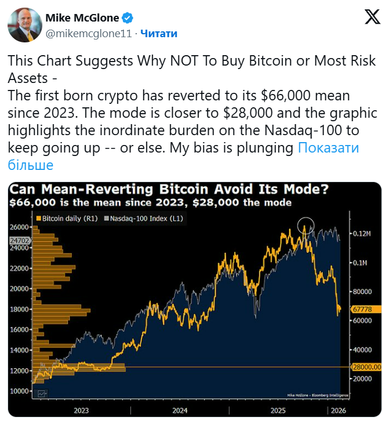

Bitcoin's price fell to $62,000 following a sharp correction driven by institutional sell-offs and macroeconomic uncertainty. Arthur Saylor, MicroStrategy founder, identified key drivers behind the drop and provided guidance for long-term investors.
Why Bitcoin Crashed to $62,000
Key factors behind the decline:
- Technical correction after $69K peak. Profit-taking emerged as the market hit local resistance levels.
- Institutional exits. Partial profit-taking by major holders like MicroStrategy increased selling pressure.
- Macroeconomic headwinds. Rising inflation and interest rates prompted investors to reduce risk exposure.
- Altcoin contagion. Declining altcoin prices amplified negative market sentiment.
Arthur Saylor's Perspective
Saylor emphasizes:
- Market cycles are normal. Corrections don't indicate systemic failure.
- Long-term fundamentals remain strong. Bitcoin continues evolving as digital gold.
- Whale activity matters. Large players significantly impact short-term liquidity.
- Volatility demands caution. Comprehensive risk management is essential.
Investor Action Plan
| Strategy | Approach | Best For |
|---|---|---|
| Long-term holding | Dollar-cost averaging, ignoring short-term swings | Investors with 3+ year horizons |
| Active trading | Stop-loss orders, asset diversification | Traders monitoring news/volume |
| Risk hedging | Stablecoins + traditional assets | Portfolios needing volatility control |
Market-Wide Impact
The Bitcoin drop triggered:
- 10-15% reduction in total crypto market cap
- Wider spreads and reduced exchange liquidity
- Capital rotation into stable assets
- Decreased interest in altcoins/DeFi
Questions & Answers
Why did Bitcoin stop falling at $62K?
The price found technical support after profit-taking from institutional investors created cascading sell pressure.
How does Saylor's commentary affect markets?
His long-term bullish stance helps stabilize sentiment during corrections.
Is now a good time to buy Bitcoin?
Long-term investors may find value, but traders should account for continued volatility.
What risks remain for Bitcoin?
Regulatory actions, macroeconomic shocks, and whale sell-offs could prolong the downturn.
How are altcoins affected?
Altcoins typically underperform during Bitcoin corrections due to reduced risk appetite.