Canadian activewear brand Lululemon has invested $30 million in Series A funding for French startup Syntetica, which developed a mixed-nylon recycling technology. The strategic move addresses textile waste—Syntetica's process recycles nylon 6 and 6.6 without pre-sorting, overcoming a major barrier for fashion's circular economy. First industrial facilities are slated for 2027.
Key Takeaways
- Lululemon participated in Syntetica's $30M Series A alongside Bpifrance and MAS Holdings
- Technology recycles nylon 6/6.6 blends into pellets—addressing 92% of non-recyclable textiles
- Pilot plant with Michelin launches 2027 in Clermont-Ferrand, France
- Market need: 9.2M tons of nylon waste generated annually, with under 8% recycled
- Process costs 23% less than conventional nylon recycling per EQT Ventures

Deal Structure & Participants
The $30M Series A was led by French state fund Bpifrance through its France 2030 program. Co-investors include Swedish VC EQT Ventures, apparel manufacturer MAS Holdings, and SWEN Capital Partners.
Why Lululemon Chose Syntetica
The brand has partnered with Syntetica since 2025, testing recycled nylon for lightweight outerwear. CEO Marco Bertone cites the technology's 23% cost advantage over alternatives as decisive.
Strategic Benefits for Investors
For MAS Holdings—Asia's largest apparel maker—the deal secures exclusive access to recycling tech critical for meeting EU regulations requiring 30% recycled content in textiles by 2030.
Nylon Recycling Technology
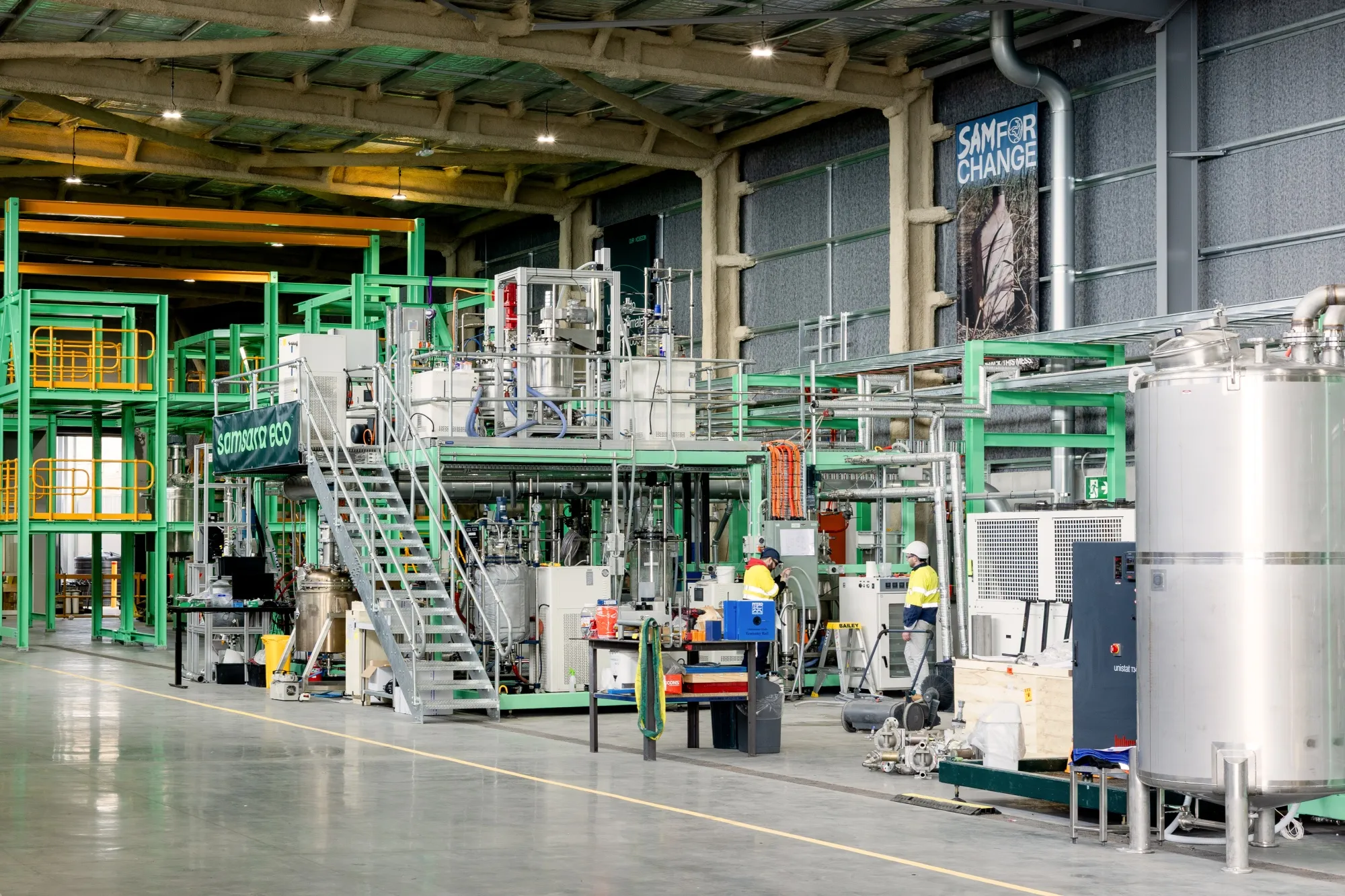
Syntetica's patented chemical process separates nylon 6 and 6.6 at molecular level without quality loss. Key steps:
- Shredding textile waste into multi-material flakes
- Chemical depolymerization in controlled environment
- Purifying recovered monomers
- Repolymerizing into virgin-quality pellets
Competitive Advantages
Unlike BASF's methods, Syntetica's tech:
- Eliminates expensive nylon-type separation equipment
- Preserves 97% of material strength vs. 89% industry average
- Processes blended fabrics (nylon+elastane)
Fashion Industry Impact
Nylon constitutes 12% of synthetic fibers per Textile Exchange. Traditional recycling required separating types 6 and 6.6—a limitation Syntetica removes.
Economic Benefits
2026's 34% oil price surge made recycled materials competitive. McKinsey projects $2.1B recycled nylon market by 2030 (8.7% CAGR).
Environmental Gains
Syntetica's tech could annually reduce:
- CO2 emissions by 4.2M tons (900,000 cars' worth)
- Water use by 380M m³ (150,000 Olympic pools)
- Oil dependence by 1.3M barrels
Syntetica's Roadmap
- 2027: Clermont-Ferrand pilot (500 tons/year)
- 2028: Industrial-scale output (5,000+ tons)
- 2030: Southeast Asian expansion
Scaling Challenges
To meet targets, Syntetica must:
- Build 12 regional hubs by 2035
- Automate 80% of sorting processes
- Secure textile waste contracts with 3+ municipalities
Questions & Answers
Why did Lululemon invest specifically in Syntetica?
The brand bets on technology solving mixed-nylon recycling—crucial for activewear. Investment ensures priority access to recycled feedstock.
How does Syntetica's tech differ from alternatives?
It jointly processes nylon 6/6.6 without quality loss, unlike mechanical recycling or separation-based methods.
When will clothes using Syntetica's recycled nylon launch?
First commercial batches expected 2028 after partner trials in 2027.
What are the project's key risks?
Main challenges: scaling technology and competing with chemical giants like BASF in recycled nylon.
How will new EU regulations affect Syntetica?
2027's ESPR directive banning unsold textile destruction creates a $760M potential market for Syntetica's recycling solutions.