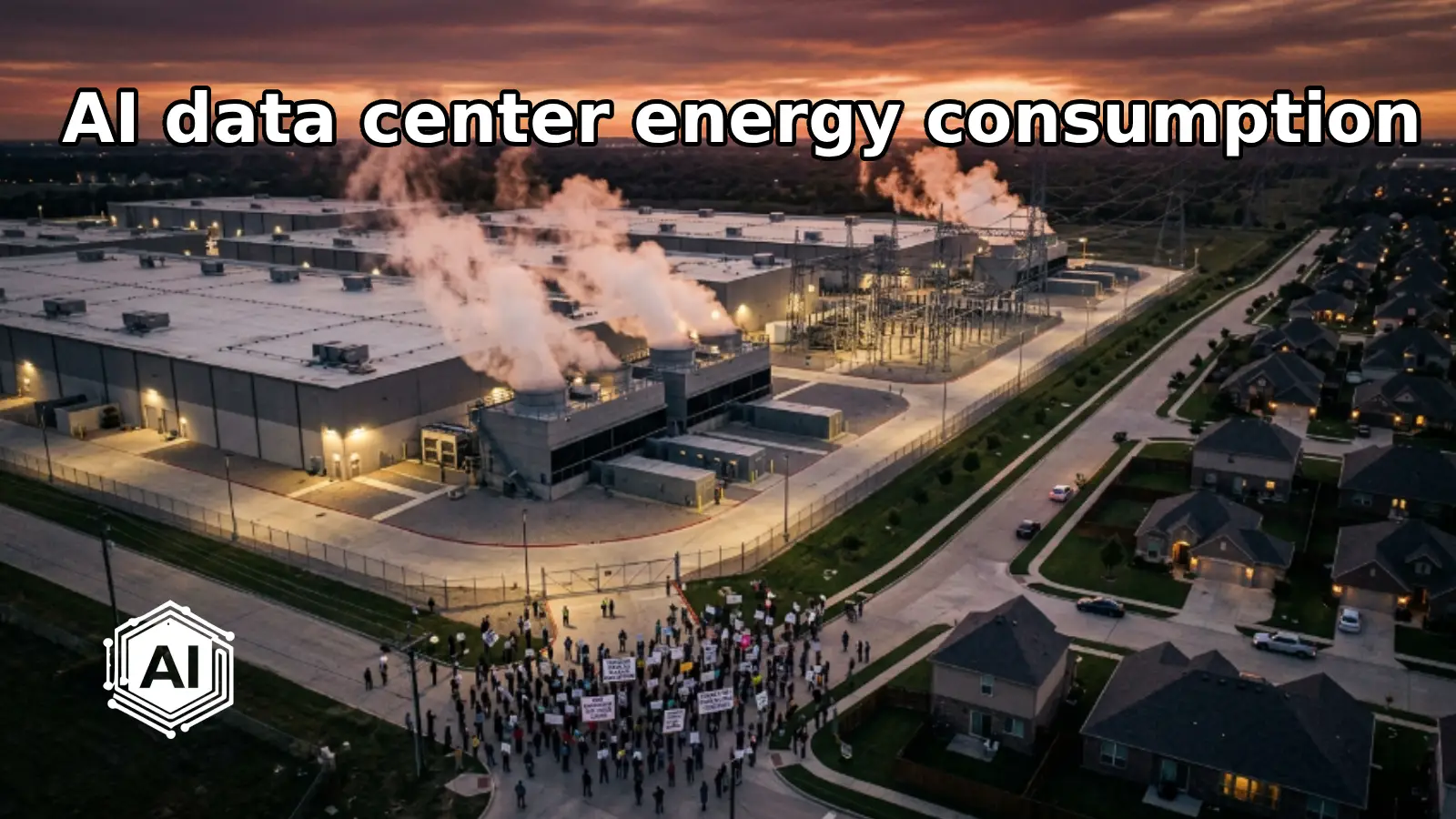
AI data centers are sparking widespread protests—their energy demands rival small cities. In Q1 2026, 75 U.S. projects worth $130B were stalled. Protest groups doubled in a year (396 to 833), citing grid strain, rising utility bills, and ecological threats. BloombergNEF predicts AI data centers will consume 8% of global electricity by 2030—more than Japan.
Energy Crisis: How Data Centers Overload Grids
A single large AI data center uses up to 500 MW—equal to 400,000 homes. In Virginia (handling 70% of global internet traffic), they already consume 21% of the state's power. US Energy Information Administration confirms: 2026 marks the first year commercial energy use surpasses residential, driven by data centers.
Top Five Concerns:
- Electricity: Training GPT-5 requires 650 MW—equivalent to a mid-sized European city
- Water: Cooling in Arizona uses 4M gallons daily
- Noise: 75 dB within 1 km radius (constant vacuum cleaner levels)
- Heat: Local temperatures rise 2-3°C near facilities
- EMI: Radiation exceeds limits by 2-3x within 500 meters
Energy Use Comparison:
| Facility | MW | Equivalent |
|---|---|---|
| Microsoft (Iowa) | 200 | 160K homes |
| GPT-5 Training | 650 | Small city |
| Meta (Utah) | 1,200 | County |
How Ireland Stopped Apple: Lessons from 2015-2018
Two activists blocked Apple's $1B project for three years through courts, citing:
- Threats to 9 bat species
- Draining 30 acres of wetlands
- 1,500 floodlights in rural areas
- 300 jobs vs. tourism losses
Timeline:
- 2015: Project announcement
- 2016: 2,100 petition signatures against
- 2017: 18-month legal battle
- 2018: Apple withdraws application
2026 Crackdown: By the Numbers
Data Center Watch reports:
- 75 projects halted
- 235K protest signatures
- $12B QTS project canceled
- Digital Gateway initiative frozen
Recent Cases:
- Delaware: Court blocked 580-acre construction
- Utah: Project Stratos scaled down by 66%
- Oregon: Amazon withdrew proposal
Legislative Response: New Restrictions
Congressional proposals include:
- 2028 construction moratorium ($1M/day fines)
- Ratepayer Protection Act ($4.2B/year)
- GRID Act (60% renewable energy by 2027)
State Measures:
- Florida: Bans cost-shifting to residents
- Idaho: 500K gallons/day water cap
- Washington: Tax breaks revoked for PUE >1.3
Financial Fallout for Big Tech
Q1 2026 results:
- Meta: $2.1B losses
- Google: 7% stock drop
- Amazon: +$900M/year in costs
Tech Solutions on the Horizon
Emerging approaches:
- Liquid cooling (-90% water use)
- Microreactors (NuScale contracts)
- Underground sites (Norwegian mines)
- Heat recycling (warms 5K homes)
Company Case Studies:
- Microsoft: Subsea centers (-40% costs)
- Meta: AI optimization (-15% energy)
- Alibaba: Solar desert farms
Questions & Answers
Why is AI so energy-hungry?
GPT-4 used 50 GWh—equal to 5,000 homes/year. One ChatGPT-5 query = 5 hours of lightbulb use.
Key environmental issues?
Grid overload, +3°C local heat, 75 dB noise, 15-ft groundwater drops.
How are companies responding?
Meta axed $12B Hyperion, Google moved to Chile, Microsoft invested $3B in cooling.
Activist alternatives?
Edge AI, industrial zones, 80% renewables, $50/MWh tax, 6-mile residential buffers.
Promising technologies?
Photonics, neuromorphic chips, district heating integration.
Global Energy System Impacts
IEA projections for 2030:
- 15-25% higher electricity prices in developed nations
- 350 new 500 MW power plants needed
- 1.2 gigatons added CO2 emissions (250M cars' worth)
Protest Economics: Who Funds Resistance
Analysis of 833 activist groups:
- 45% local environmental orgs
- 30% energy worker unions
- 15% rival energy firms
- 10% anonymous crypto donations
Campaign Budgets:
| Region | Average Budget | Top Donor |
|---|---|---|
| California | $2.1M | Sierra Club |
| Texas | $1.4M | NextEra Energy |
| Europe | $3.8M | Greenpeace |
Regulatory Future: 2030 Scenarios
Expert predictions:
- Hardline: Global mega-center ban + 100% renewables mandate
- Compromise: 5% regional power caps + eco-standards
- Laissez-faire: $80/MWh tax with no siting limits
Probability:
- Scenario 1: 25% (requires global treaties)
- Scenario 2: 55% (already emerging in EU/CA)
- Scenario 3: 20% (Big Tech-backed)
Conflict Hotspots
March 2026 protest map:
- US: Virginia (32 projects), Texas (18), Oregon (12)
- Europe: Ireland (8), Netherlands (6), Germany (5)
- Asia: Singapore (3), Malaysia (2), South Korea (1)
Common Protester Arguments:
- Virginia: "Electricity prices spiked 47% in 2 years"
- Ireland: "One center = annual power for 360K homes"
- Singapore: "Housing shortages while data centers expand"
Big Tech's Adaptation Playbook
Strategic pivots under pressure:
- Decentralization: Microsoft builds 12 micro-centers vs. 3 mega-hubs
- Lobbying: Google funds $12M "AI for Green" campaign
- Tech: Meta's load-predicting AI (92% accuracy)
- Partnerships: Amazon + NextEra's $4B solar farms
Social Ripple Effects
Unintended consequences:
- New conservative-eco political alliances
- 78% of decisions now via local referendums
- 12K new jobs in alternative energy
Community Initiatives:
- Virginia: $200/household utility rebates
- Ireland: "Green AI" courses for 5,000 students
- California: $50M grants for efficient chips