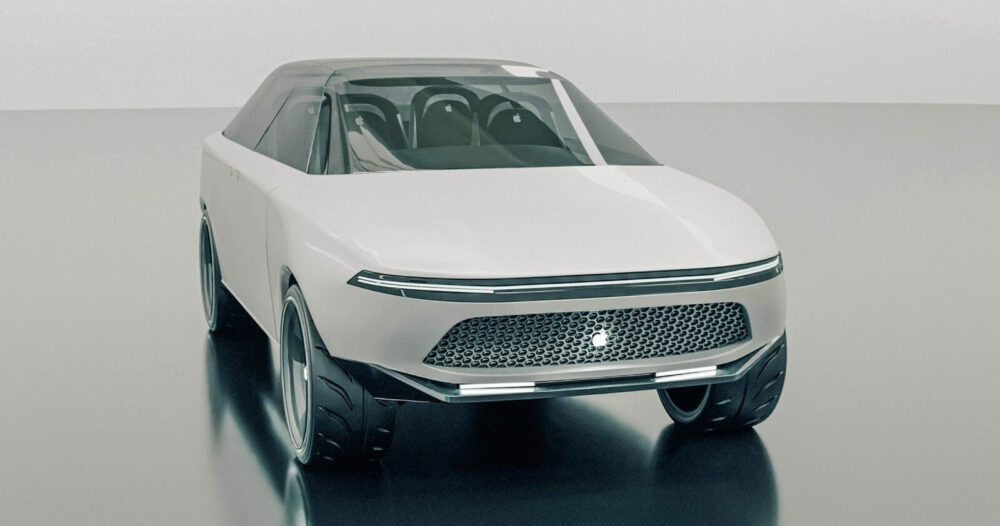
After a decade of development, Apple scrapped its autonomous vehicle project and pivoted resources to artificial intelligence. Technologies from the failed car initiative became the foundation for the new M7 Ultra AI chips featuring Neural Engine, supporting up to 1.5TB of unified memory and serving as the platform for Apple's future server solutions. First devices powered by M7 Ultra are expected in 2027.
The Rise and Fall of Apple's Car Project
Key Reasons for Failure
- Technical hurdles achieving Level 4-5 autonomy — test prototypes couldn't safely navigate complex urban environments
- Development costs exceeding $10 billion over 10 years, including acquisitions of autonomous driving startups
- No mass automotive manufacturing experience — unlike Tesla, Apple lacked infrastructure to produce millions of vehicles
- Strong competition from Tesla and Waymo, which already had functional prototypes and test fleets
- Failed partnership negotiations with Hyundai and other automakers
Neural Engine — The Project's Technological Legacy
Apple's computer vision and sensor processing R&D for the car became the foundation for Neural Engine. This neural processor first appeared in iPhone X (2017) with the A11 Bionic chip. The original architectural solutions were actually designed for autonomous driving tasks — real-time pedestrian detection, road sign recognition, and obstacle avoidance.
Neural Engine Evolution
| Year | Chip | Performance | Key Advancements |
|---|---|---|---|
| 2017 | A11 Bionic | 600 billion ops/s | First generation, Face ID support |
| 2020 | M1 | 11 trillion ops/s | ARM transition, 16-core design |
| 2023 | M2 Ultra | 31 trillion ops/s | Chip stacking, 24-core Neural Engine |
| 2027* | M7 Ultra | ~100 trillion ops/s* | Expected 48 cores, transformer acceleration |
*Projected specs based on Apple patents
Accelerated M7 Ultra Development
Apple is skipping the M6 generation entirely to focus on M7 with radically improved Neural Engine. Fabricated on 3nm process, the chip will launch in early 2027. Analysts attribute this aggressive timeline to three factors:
- Competitive pressure from NVIDIA in AI accelerators
- Need for local LLM (Large Language Model) support on Apple devices
- Foundation for future AR/VR solutions
M7 Ultra Key Features
- Up to 1.5TB unified memory — triple M2 Ultra's capacity
- 48-core Neural Engine with dedicated transformer blocks
- 4× faster machine learning performance vs M2
- 30% better server-grade energy efficiency
- New cooling system for dense server racks
Apple's M7 Ultra Server Solutions
Beyond Mac Pro, Apple plans to deploy M7 Ultra in proprietary server racks for cloud AI services, enabling:
- Local data processing without public cloud transmission
- Reduced dependence on AWS/Azure infrastructure
- Enhanced privacy through on-device computation — Apple's key differentiator
- Hybrid computing architecture — split between devices and Apple's "private cloud"
Insiders report server-grade M7 Ultra will feature modified architecture for parallel computing, supporting up to 4 chips per system.
Industry Impact and Competitive Landscape
The M7 Ultra could reshape the AI chip market:
- Strengthens Apple's edge computing hardware position
- Challenges NVIDIA in server solutions via ARM efficiency
- Accelerates on-device processing competition (Qualcomm/Samsung)
- May push cloud providers toward hybrid models
- Boosts local LLM development, reducing cloud API dependence
Practical Implications
For Developers
New Core ML and Create ML capabilities including:
- On-device model training
- Neural Engine-specific quantization
- Transformer architecture optimization
For Enterprises
Ability to deploy complex ML models:
- On Apple servers without GPUs
- With strict data privacy compliance
- At lower power consumption
Questions & Answers
Why did Apple cancel its autonomous vehicle project?
Primary reasons were technical challenges achieving full autonomy (SAE Level 4-5), excessive costs (~$1B annually), and strong market competition (Tesla already had millions of vehicles with Autopilot).
Which car project technologies transferred to AI chips?
Computer vision algorithms (semantic segmentation), lidar/radar data processing (neural filters), and real-time machine learning architectures became Neural Engine foundations, along with energy-efficient computing expertise.
When will M7 Ultra launch?
Consumer devices expected early 2027. Server version may follow late 2027 or early 2028.
What are Neural Engine's advantages?
10× better energy efficiency than x86, optimized for low-latency on-device processing, tight ecosystem integration (Metal, Core ML), and hardware acceleration for modern architectures (transformers, diffusion models).
How will M7 Ultra impact server markets?
Could establish Apple as an energy-efficient, privacy-focused alternative to NVIDIA GPU servers — particularly for sensitive sectors like healthcare, finance, and government.
Will M7 Ultra be available to third parties?
Unlikely — Apple historically doesn't sell chips separately, but may offer cloud access to M7 Ultra compute power via services.
What's the expected pricing for M7 Ultra devices?
Analysts predict 20-30% premium over current Mac Pro models due to 3nm production costs and increased memory capacity.